A Deep
Dive Into India’s Oldest & Most Iconic Homegrown Brands
India’s
entrepreneurial spirit didn’t begin in 1947. Long before Independence,
visionary founders and small businesses were creating brands that would define
Indian households for decades. Despite world wars, colonial restrictions, and
limited resources, these brands rose to become cultural icons.
Here is a
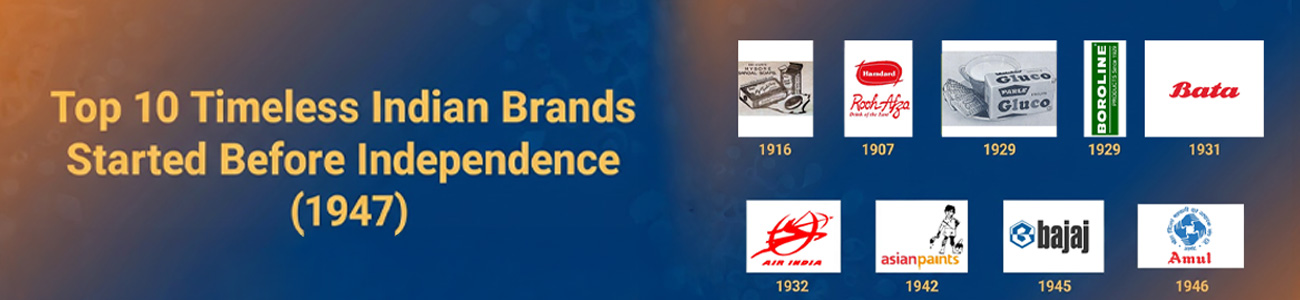
detailed look at 10 legendary Indian brands that started before
Independence — enriched with history, evolution, and legacy.
1. Mysore Sandal Soap
(Founded: 1916)
The Story
In 1916,
during World War I, the Kingdom of Mysore faced a massive surplus of sandalwood
trees but lacked ways to export them. To prevent loss, the Government of
Mysore decided to create value-added products — and thus, Mysore Sandal
Soap was born.
Why It Became Iconic
- First soap in the world made
with 100% pure sandalwood oil
- Fragrance and formulation
unchanged for 100+ years
- Strong emotional value,
associated with purity and royalty
Present-Day Legacy
Even
today, the soap is produced by the Karnataka Soaps and Detergents Limited
(KSDL) and is considered a luxury bathing experience.
2. Rooh Afza (Founded:
1907)
Origin
Created
by Hakim Hafiz Abdul Majeed in Delhi, Rooh Afza was formulated as a
Unani medicinal drink designed to keep the body cool in extreme Indian summers.
Why It Became Popular
- A blend of fruits, herbs,
flowers, and natural extracts
- Often consumed during
Ramadan, giving it deep cultural meaning
- Known as the “summer
companion” in Indian households
Legacy Today
Rooh Afza
is still manufactured by Hamdard Laboratories and continues to dominate
the sharbat category.
3. Parle-G (Founded: 1929)
Birth of India’s Most Loved Biscuit
Founded
by the Chauhan family, Parle began as a small confectionery. In the 1930s, when
British biscuits dominated the market, Parle introduced an affordable
alternative — Parle Gluco Biscuits.
Why It Became a Legend
- Affordable nutrition for
millions
- Loved by kids, students,
tea-lovers, and travelers
- One of the world’s
best-selling biscuits
Cultural Influence
Parle-G
became part of Indian childhood — dipped in tea, eaten on journeys, and often
recommended by doctors as an energy booster.
Origins
Boroline
was created by G.D. Pharmaceuticals, symbolizing the combination of:
- “Boro” → boric acid
- “Oline” → lanoline
Why It Endures
- Excellent antiseptic and
skin repair cream
- Trusted in Indian households
for cracked heels, dryness, cuts
- Strong nostalgic value
Brand Identity
The green
tube and scent remain unchanged — a sign of brand consistency.
5. Bata India (Founded:
1931)
The Story
Though
originally Czech, Bata set up its largest production unit in India
(Kolkata) in 1931. Soon, it became the most preferred footwear brand for Indian
families.
Why It Won Hearts
- Reliable, durable, and
affordable
- Massive retail network
across India
- Known for school shoes
across multiple generations
Current Status
Bata is still
one of India’s most trusted footwear brands.
6. Air India (Founded: 1932)
How It Started
Founded
as Tata Air Services in 1932 by industrial pioneer J.R.D. Tata,
it was India’s first commercial airline.
Significance
- Started with mail flights
- Became a bridge between
India and global destinations
- Known for premium
hospitality
Where It Stands Now
Air India
is once again under the Tata Group, bringing its legacy full circle.
7. Asian Paints (Founded:
1942)
The Origin Story
During
World War II, four friends — Champaklal Choksey, Suryakant Dani, Arvind Vakil,
and Chimanlal Choksi — started Asian Paints in Mumbai.
Why It Succeeded
- Smart pricing strategy
against big foreign brands
- Innovative marketing
- Strong dealer relationships
Present
Now
India’s largest paint company, Asian Paints operates in 15+ countries.
8. Mahindra & Mahindra (Founded: 1945)
Beginning
Founded
by brothers J.C. Mahindra and K.C. Mahindra, Mahindra began
assembling Willys Jeeps in India after World War II.
Evolution
- From jeeps → SUVs
- From automotive →
multi-sector conglomerate
- Built a strong rural and
urban presence
Today
Mahindra
is a global powerhouse known for rugged vehicles and innovation.
9. Bajaj Auto (Founded: 1945)
Origin
Started
as a vehicle importer, Bajaj later manufactured India’s most iconic scooters.
Why It Became a Cultural Symbol
- Middle-class family mobility
- Affordable transportation
- The sound of the Bajaj
scooter became part of Indian streets
Current Standing
Now a
leading global motorcycle manufacturer.
10. Amul (Founded: 1946)
Creation
Amul
began in Anand, Gujarat, as a cooperative movement to fight exploitation
of milk farmers.
Achievements
- Enabled India’s White
Revolution
- Brought fair prices to
farmers
- Created the famous “Amul
Girl” mascot
Current Legacy
Amul is
India’s largest dairy brand and an inspiration for cooperative success
worldwide.
Final Thoughts
These brands didn’t just survive through colonial rule.
they thrived, innovated, and
became symbols of Indian trust, culture, and resilience. Their stories show
that great ideas can stand the test of time when built with integrity
and purpose.